Information for Parents of Schoolhouse-Historic period Children
You lot probably know that a dental cavity is a hole in a tooth. But did you lot know that a cavity is the upshot of the molar decay process that happens over time? Did you know that you can interrupt and even reverse this process to avoid a cavity?
This web folio explains how the tooth decay procedure starts and how it can be stopped or even reversed to keep your child from getting cavities.
Back to top
What'south inside our mouths?
Copyright 2000 BSCS and Videodiscovery. All rights reserved. Used with permission.
Our mouths are full of bacteria. Hundreds of dissimilar types live on our teeth, gums, tongue and other places in our mouths. Some bacteria are helpful. But some can be harmful such as those that play a role in the tooth disuse process.
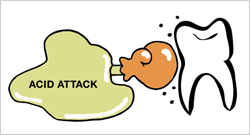
Tooth decay is the issue of an infection with sure types of bacteria that use sugars in nutrient to make acids. Over time, these acids tin make a cavity in the tooth.
Dorsum to pinnacle
What goes on within our mouths all mean solar day?
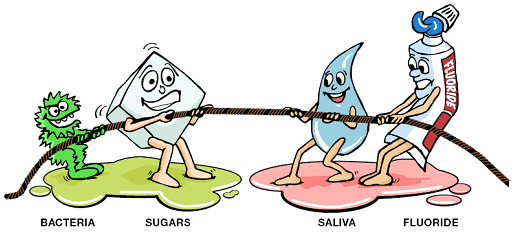
Throughout the day, a tug of war takes place inside our mouths.
Copyright 2000 BSCS and Videodiscovery. All rights reserved. Adjusted with permission.
On one squad are dental plaque–viscid, colorless film of leaner–plus foods and drinks that contain saccharide or starch (such as milk, bread, cookies, candy, soda, juice, and many others). Whenever we eat or drink something that contains carbohydrate or starch, the bacteria employ them to produce acids. These acids begin to eat away at the molar's hard outer surface, or enamel.
On the other team are the minerals in our saliva (such as calcium and phosphate) plus fluoride from toothpaste, water, and other sources. This team helps enamel repair itself by replacing minerals lost during an "acid attack."
Our teeth go through this natural process of losing minerals and regaining minerals all solar day long.
Back to top
How does a cavity develop?
Copyright 2000 BSCS and Videodiscovery. All rights reserved. Used with permission.
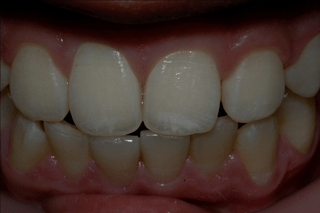
When a tooth is exposed to acid oft -- for case, if you eat or drink often, especially foods or drinks containing carbohydrate and starches -- the repeated cycles of acid attacks cause the enamel to go along to lose minerals. A white spot may appear where minerals have been lost. This is a sign of early on decay.
Tooth decay tin be stopped or reversed at this point. Enamel can repair itself by using minerals from saliva, and fluoride from toothpaste or other sources.
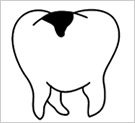
Simply if the tooth decay process continues, more than minerals are lost. Over time, the enamel is weakened and destroyed, forming a crenel. A crenel is permanent damage that a dentist has to repair with a filling.
Back to peak
How can nosotros assist teeth win the tug of war and avert a cavity?
Use fluoride
Fluoride is a mineral that can forbid molar decay from progressing. It can even reverse, or stop, early on tooth disuse.
Fluoride works to protect teeth. It . . .
prevents mineral loss in molar enamel and replaces lost minerals
reduces the ability of leaner to make acid
Copyright 2000 BSCS and Videodiscovery. All rights reserved. Used with permission.
You can get fluoride by:
Drinking fluoridated water from a community h2o supply; about 74 per centum of Americans served by a community water supply organisation receive fluoridated water. (If y'all have well h2o, see "Private Well Water and Fluoride" from the Centers for Disease Control and Prevention.)
Brushing with a fluoride toothpaste
If the dentist thinks your child needs more fluoride, he or she may -
Utilize a fluoride gel or varnish to tooth surfaces
Prescribe fluoride tablets
Recommend using a fluoride mouth rinse
About Bottled H2o
Virtually bottled h2o does not contain enough fluoride to prevent tooth disuse. If your child drinks only bottled h2o, talk with a dentist or doctor about whether your child needs additional fluoride in the form of a tablet, varnish, or gel.
Keep an heart on how oft your child eats, as well equally what she eats.
Your child's diet is important in preventing a cavity. Call up . . . every time nosotros swallow or drink something that contains sugar or starches, bacteria in our mouth utilise the saccharide and starch to produce acids. These acids begin to eat away at the tooth's enamel.
Our saliva tin can assist fight off this acid set on. But if we eat frequently throughout the twenty-four hour period -- peculiarly foods and drinks containing sugar and starches -- the repeated acid attacks will win the tug of war, causing the tooth to lose minerals and eventually develop a cavity.
Copyright 2000 BSCS and Videodiscovery. All rights reserved. Used with permission.
That'due south why it's important to keep an eye on how oft your children consume as well as what they eat.
Tooth-friendly tips:
Limit between-meal snacks. This reduces the number of acid attacks on teeth and gives teeth a chance to repair themselves.
Salvage candy, cookies, soda, and other sugary drinks for special occasions.
Limit fruit juice. Follow the Daily Juice Recommendations from the American Academy of Pediatrics.
Make sure your kid doesn't swallow or beverage anything with sugar in it after bedtime tooth brushing. Saliva catamenia decreases during sleep. Without plenty saliva, teeth are less able to repair themselves after an acrid attack.
Make sure your kid brushes
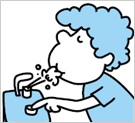
Brushing with fluoride toothpaste two times each day is important for preventing cavities.
Exist certain to supervise young children when they castor. Here's what you should know:
Copyright 2000 BSCS and Videodiscovery. All rights reserved. Used with permission.
For children aged 3 to 6, you lot put the toothpaste on the brush. Use only a pea-sized corporeality of fluoride toothpaste. (In children nether age 2, dental experts recommend that you practice not use fluoride toothpaste unless a doctor or dentist tells yous to.)
Encourage your child to spit out the toothpaste rather than eat it. Children under 6 tend to consume much of the toothpaste on their
Mild fluorosis brush. If children regularly consume higher-than-recommended amounts of fluoride during the teeth-forming years, their permanent teeth may develop white lines or flecks called dental fluorosis. Fluorosis is usually balmy; in many cases, only a dental professional would notice information technology.
Until they are 7 or 8 years old, yous will need to help your child brush. Young children cannot become their teeth clean by themselves. Effort brushing your child's teeth first, and then allow them finish.
Talk to a dentist near sealants
Copyright 2000 BSCS and Videodiscovery. All rights reserved. Used with permission.
Dental sealants are another good way to aid avoid a crenel. Sealants are thin, plastic coatings painted onto the chewing surfaces of the back teeth, or molars. Here's why sealants are helpful: The chewing surfaces of dorsum teeth are rough and uneven because they have small-scale pits and grooves. Food and leaner tin can get stuck in the pits and grooves and stay in that location a long time because toothbrush bristles tin't easily brush them abroad. Sealants cover these surfaces and form a barrier that protects teeth and prevents nutrient and leaner from getting trapped there.
Since most cavities in children and adolescents develop in the molars (the back teeth), information technology'south best to get these teeth sealed as presently every bit they come up in:
The kickoff permanent molars called - "6 yr molars" - come in betwixt the ages of 5 and 7.
The second permanent molars - "12 twelvemonth molars" - come in when a child is between 11 and xiv years old.
Take your child to the dentist for regular bank check-ups
Visit a dentist regularly for cleanings and an examination. During the visit the dentist or hygienist will:
Remove dental plaque
Check for any areas of early molar decay
Show yous and your child how to thoroughly clean the teeth
Utilize a fluoride gel or varnish, if necessary
Schedule your next regular check-upward
NIDCR would like to give thanks Dr. Margherita Fontana, an expert in cariology at the Academy of Michigan School of Dentistry, for scientific review of this material.






0 Response to "How To Repair Tooth Decay Naturally"
Post a Comment